




Introduction — History and Art: How the Canals Shaped Amsterdam’s Museums
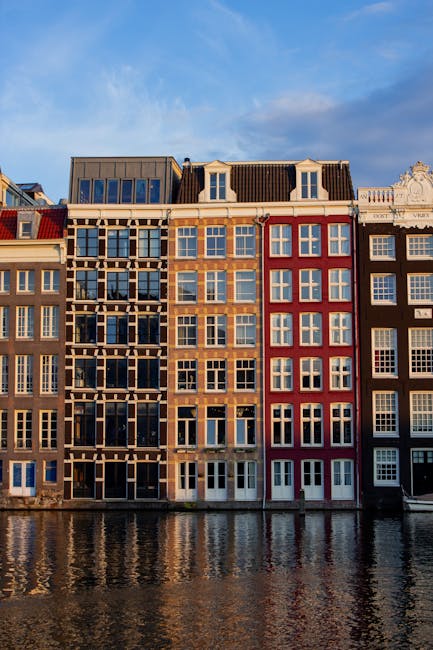
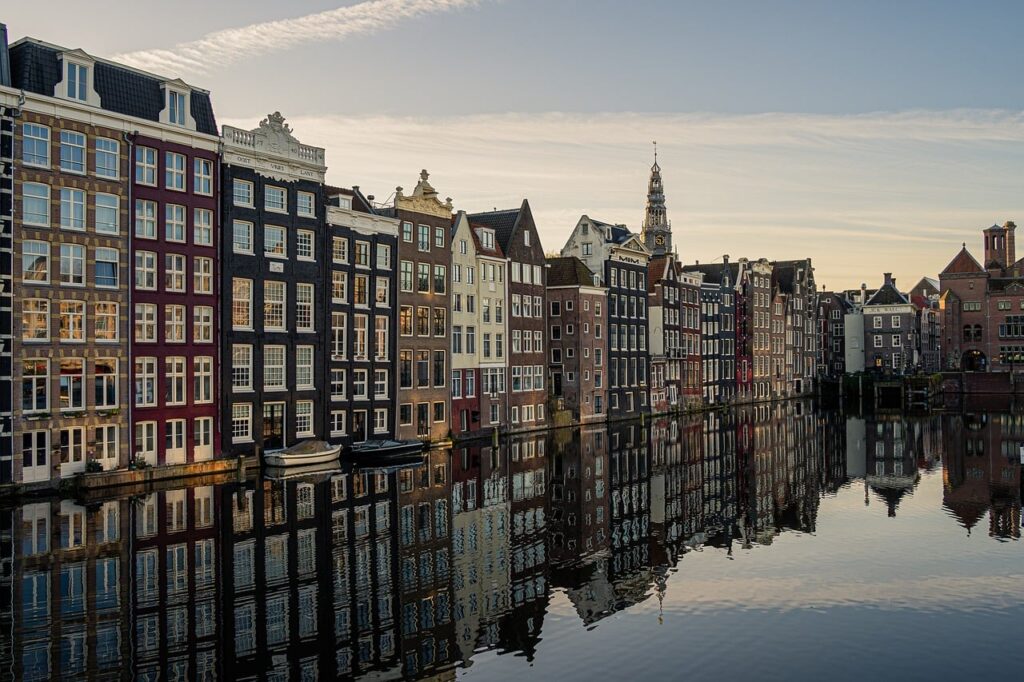
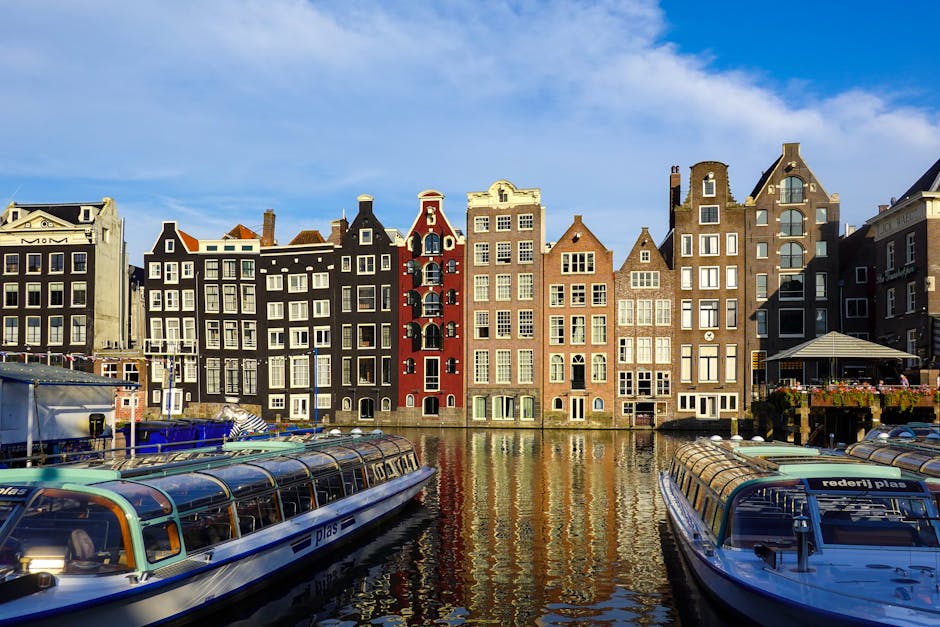
In Amsterdam, the canals are more than just waterways: they form a living network that has shaped the city since the 17th century and still defines its cultural identity today. The famous Grachtengordel (the canal belt) — made up of the Herengracht, Keizersgracht and Prinsengracht — was carved out to house a prosperous bourgeoisie, facilitate trade and organize urban space. Today, those same canals lined with gabled merchant houses and narrow facades host a wealth of museums and cultural institutions, turning water into a core element of museum display and conservation.
This overview looks at how Amsterdam’s canals influence where museums are located, their architecture, the narratives they tell and how visitors experience them. You’ll see that proximity to water has determined which buildings were converted into museums, how collections are exhibited, the conservation challenges (humidity, light, structure) and the unique ways visitors can approach and stroll through them — including by boat — which change one’s perspective. Museums here aren’t only exhibition spaces: many are historic buildings — merchants’ houses, warehouses, former townhouses — whose silhouettes and floorplans are direct legacies of canal topography.
This guide is aimed at the curious traveler who wants to understand why, in Amsterdam, history and art are inseparable from water. You’ll find practical details about major institutions (full names, exact addresses, prices in euros, usual opening hours), immersive descriptions of museum spaces and local tips to get the most out of your visit. Whether you’re planning a themed deep-dive (the Dutch Golden Age, Rembrandt, Van Gogh) or you’re passionate about urban architecture, I’ll explain how each museum displays its works in direct dialogue with the canal: views from the water, walkways that hug the quay, or rooms bathed in light reflected off the water.
Finally, you’ll get practical advice for handling crowds (online bookings, best times to go), tips for combining walks with boat tours, and conservation notes that explain why some places restrict photography, tightly regulate temperature and humidity, or feature specific arrangements along the banks. The canals here are not mere scenery: they are a material, a constraint and an opportunity that have reshaped how the past is told and the present exhibited.
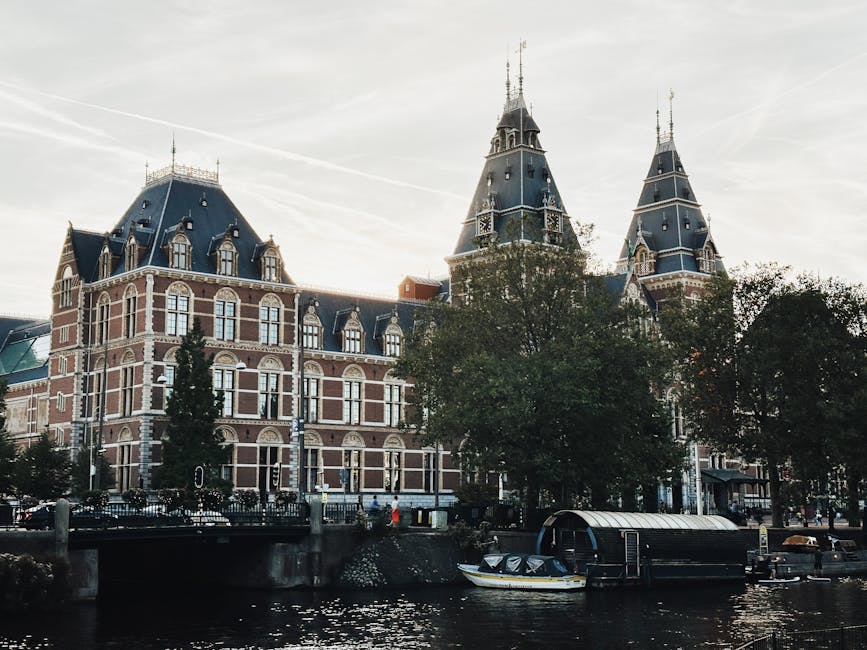
Rijksmuseum and the Golden Age Reflected on the Water
The Rijksmuseum Amsterdam (official name: Rijksmuseum Amsterdam) sits at Museumstraat 1, 1071 XX Amsterdam. As the national collections’ flagship, it showcases major works from the Dutch Golden Age, including Rembrandt’s The Night Watch. The main building, designed by Pierre Cuypers and refurbished in 2013, is typically open from 09:00 to 17:00 (hours may vary for special exhibitions). A standard adult ticket costs around €22 (reduced rates and free admission for certain visitors, check online). Its address and façade face the expansive Museumplein, but it’s the surrounding canals — notably the Singelgracht bordering the southwest — that dictated the park’s layout and the use of nearby warehouses.
Visiting the Rijksmuseum with its relationship to the canals in mind helps you understand how exhibition spaces use filtered light and framed views: some galleries offer visual sightlines toward the canal or the inner garden, and visitor circulation follows axes that mirror the waterways. In the museum’s storytelling, themes of maritime commerce, goods transport and waterfront urban life recur. Don’t miss the applied arts and maritime objects that document the spice trade logistics and colonial commerce.
Local tip: buy your ticket online via the official site and arrive early (or late afternoon on Wednesdays or Thursdays) to avoid the tour groups. The museum is served by trams 2, 5 and 12 to the “Rijksmuseum” stop.
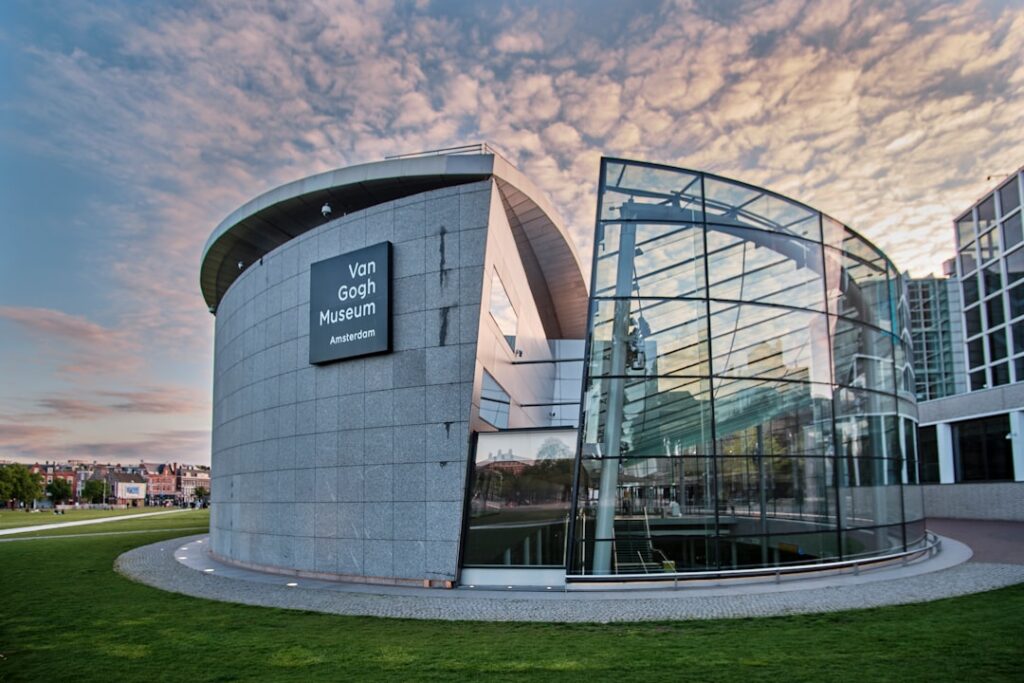
Van Gogh Museum and the Way Canals Affect Color and Light
The Van Gogh Museum (official name: Van Gogh Museum) is located at Museumplein 6, 1071 DJ Amsterdam. It houses the largest collection of Vincent van Gogh’s works as well as letters, studies and paintings charting his development. Typical opening hours are 09:00 to 18:00, with some evenings open until 21:00 (check the official calendar for late openings and events). A standard adult ticket is about €20 (reductions for students, youth and certain pass holders). The museum’s connection to the canals is more subtle: built on a plot that links Museumplein to nearby canals, it benefits from a microclimate that shapes the natural light entering its galleries.
The contemporary building is designed to guide the visitor through chromatic and emotional themes; the surrounding water acts as an amplifier of reflected light, influencing how colors in the paintings are perceived. Conservation teams closely monitor relative humidity (generally kept between 45–55 %) and temperature to protect fragile pigments — constraints directly tied to proximity to water. The museum offers audio guides in multiple languages and thematic tours (special exhibitions) that explore landscape influences, including the omnipresence of canals in period drawings and watercolors.
Practical tip: book a specific time slot; mornings just after opening are perfect for a quieter look at smaller works. The nearest tram stop is “Van Baerlestraat” (tram 2, 3, 12).
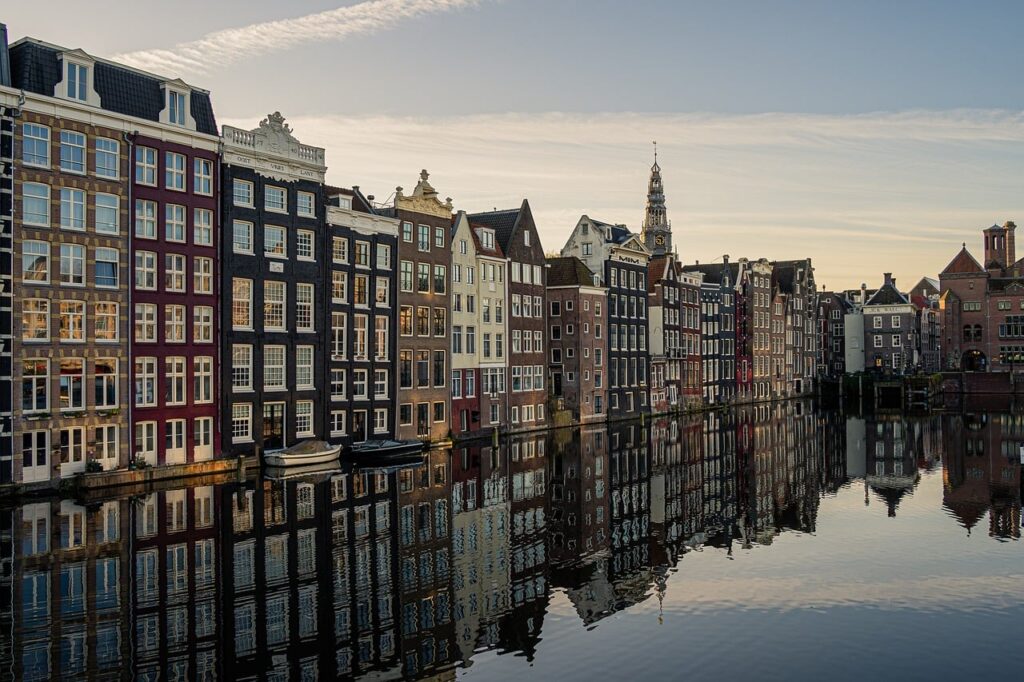
House Museums and the Museum-Making of Canal Facades
Many of Amsterdam’s museums occupy former merchant houses or narrow canal-side buildings. Among them, the Rembrandt House Museum and the Anne Frank House show how canal architecture becomes museological. The Rembrandt House Museum (Museum Het Rembrandthuis) is at Jodenbreestraat 4, 1011 NK Amsterdam. Hours: generally 10:00–17:00; adult ticket around €15. The building preserves the studio and a reconstruction of period furnishings, giving a direct view into working conditions in a typical canal house.
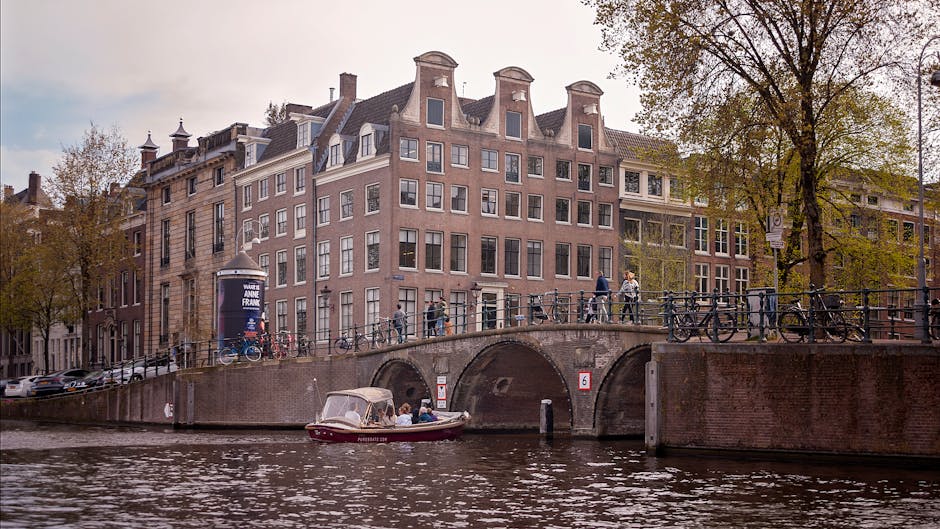
The Anne Frank House (Anne Frank Huis) is located at Westermarkt 20, 1016 GV Amsterdam. Opening hours vary, but it’s commonly open from 09:00 to 19:00 (extended in high season); an adult ticket costs about €14 (timed tickets, advance online booking required). Situated on the Prinsengracht, the house uses the narrow plot and domestic layout inherited from canal zoning to recreate the intimacy and spatial constraints that are central to its story. Visitors move through narrow corridors and low-capacity rooms, which deepens the immersive, memorial experience.
These house-museums illustrate how canal topography dictated urban form: facades facing the water, narrow staircases and shallow, deep lots. From a curatorial standpoint, that requires tailored solutions: attendance limits, guided routes, delicate lighting schemes and partitioned displays to preserve the historic atmosphere. Many adapted museums keep original elements (beams, floors, sash windows) and augment them with digital resources to contextualize canal-side life in the 17th century.
Maritime Museums and the Riverfront: Displaying Waterborne Heritage
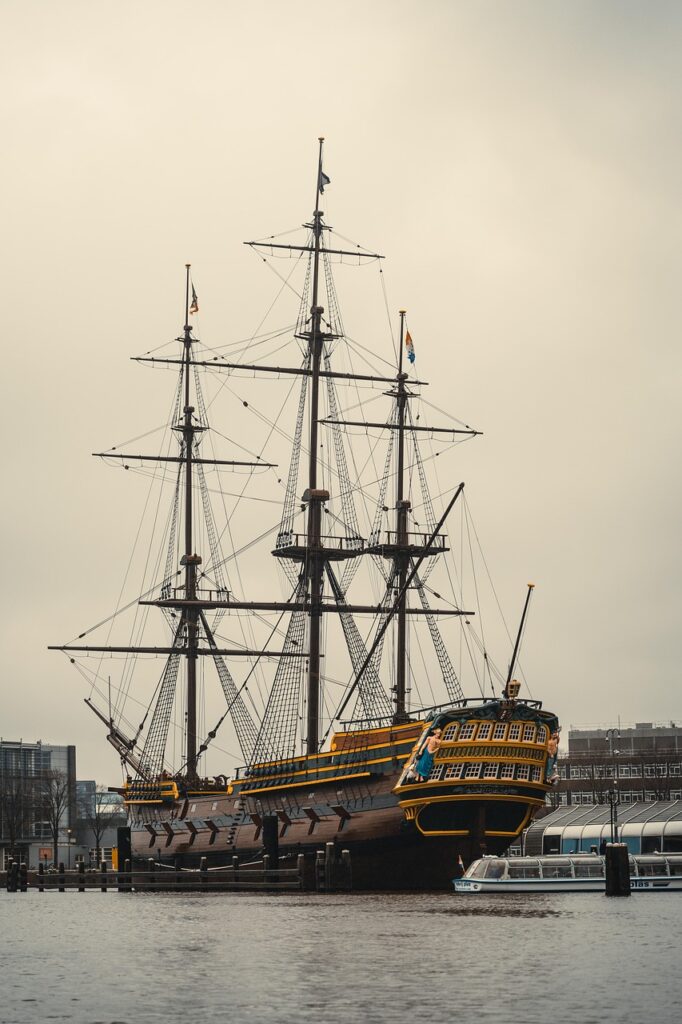
Museums devoted to the sea and inland waterways naturally sit along the water. Het Scheepvaartmuseum (National Maritime Museum) is located at Kattenburgerplein 1, 1018 KK Amsterdam. Usual hours: 09:00–17:00; adult admission about €17. Housed in a former naval storehouse, it uses quays and basins to exhibit ships, models and navigation instruments. Direct contact with the water sometimes allows for “living” exhibits where restored boats can be moored nearby and viewed from museum terraces.
The Hermitage Amsterdam (official name: Hermitage Amsterdam) is at Amstel 51, 1018 EJ Amsterdam. Hours: typically 10:00–17:00; adult ticket roughly €18. Set in a monumental building on the Amstel, it hosts rotating exhibitions often tied to Russia and Europe, and its riverside position contributes to displays where the river becomes part of the exhibition’s panorama.
For visitors, these maritime museums deliver a sensory experience: the smell of wood and brine, the sounds of water, views from the quays that place collections in their original context. If you enjoy interactive exhibits (floating models, navigation simulators), allow 2–3 hours for Het Scheepvaartmuseum. The quays also make excellent photo vantage points, especially at golden hour.
Conservation, Climate and Technical Challenges by the Water
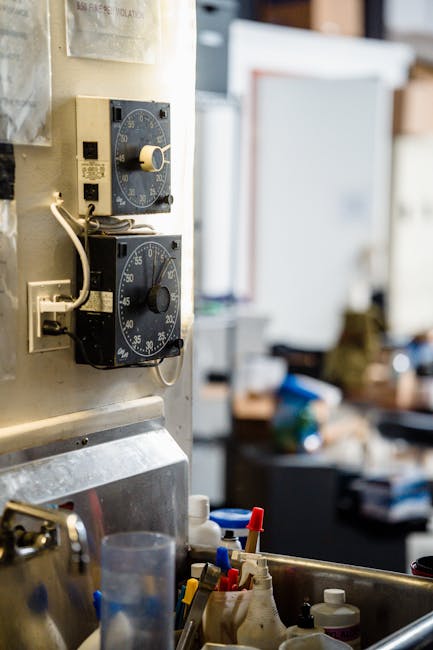
Being close to the canals introduces technical challenges for conserving artworks: humidity fluctuations, infiltration risks, temperature swings and corrosive ions. Amsterdam’s museums have developed strict protocols — HVAC systems (heating, ventilation and air conditioning), waterproof barriers, continuous hygrometric monitoring — to keep recommended conditions (generally 18–21 °C and 45–55 % relative humidity for most collections).
Architects and engineers adapt museum conversions with geotechnical surveys and reinforced foundations. For example, the Rijksmuseum and the Hermitage have used modern techniques to limit water impact while respecting historic integrity. Temporary exhibitions are often built as self-contained, moisture-resistant modules, and sensitive items (paper, photographs, textiles) are stored in microclimate vitrines.
Visitor tip: follow no-photography and silence rules in sensitive areas. If you’re a photographer, check with the communications office about special permissions and tailored lighting — that reduces the risk of accidental damage to works.
Practical Tips and Combined Itineraries along the Canals
Planning your Amsterdam visit with the canals in mind helps you save time and enrich the experience. Here are some practical recommendations:
- Tickets: Buy online for the Van Gogh Museum, the Rijksmuseum and the Anne Frank House. Slots are limited, especially in high season (April–September).
- Pass: The Museumkaart (museum card) can be worthwhile if you plan to visit multiple museums and satellite sites; check each site’s eligibility.
- Transport: Favor walking and cycling between museums in the Grachtengordel; the canals are often loveliest on foot. Trams (lines 2, 5, 12, 16 and others) serve most major museums.
- Combos: Suggested route: Rijksmuseum (Museumstraat 1) in the morning, then stroll along Stadhouderskade toward the Van Gogh Museum (Museumplein 6); in the afternoon, head down to the Prinsengracht to visit the Anne Frank House (Westermarkt 20) and continue into the Jordaan with its small galleries.
- Boat tours: Pair a maritime museum with a canal cruise (e.g. Blue Boat Company, Stadhouderskade 1, 1053 AE Amsterdam) to see façades from the water — book ahead in summer.
Conclusion — Water as the Narrative Thread of Amsterdam’s Museums
Amsterdam’s canals are far more than tourist scenery: they structure the city, shape building forms, influence the conservation of collections and enrich museum narratives. Institutions — from the Rijksmuseum to the Van Gogh Museum, from the Anne Frank House to maritime museums — testify to a history in which water fostered commerce, patronage and cultural exchange. Understanding this water–museum relationship lets visitors read the city differently: every narrow façade tells an economic story, every quay evokes a cargo, every studio-museum reveals a profession tied to waterborne transport.
Practically speaking, being near the canals brings both constraints and opportunities: book online, watch the weather, seize the exceptional photo ops from bridges and boats. For art history lovers, seeing a Dutch painting in its watery urban context adds depth: the perspectives, reflections and light so characteristic of Dutch imagery gain new resonance once you know these works were created facing those same waters. Finally, the conservation and architectural adaptations show how preserving heritage today requires sophisticated technical solutions while respecting the authenticity of the places.
To get the most out of your cultural stay in Amsterdam, mix morning museum visits, canal walks and short cruises, and don’t forget the smaller house-museums — they often tell the most faithful stories of everyday life by the water. Amsterdam is a city-museum where history and art quite literally glide along the water — a full sensory and intellectual experience.